
Conditions & Treatments
What we evaluate and how we help
Chiropractic care addresses the cause of a problem rather than only the symptom. Below is an overview of the conditions our patients most often come to us with, including but not limited to the ones listed here.
Conditions We Evaluate
Common concerns we help patients with
Headaches & Migraines
Recurring headaches and migraines, including those that have not responded to other treatment.
Neck & Back Pain
Acute injuries and long-standing spinal pain, including disc-related injuries that do not require surgery.
Sciatica & Leg Pain
Nerve pain travelling from the lower back into the leg, hip, knee or foot.
Vertigo & Dizziness
Balance and inner-ear symptoms that may relate to upper cervical spinal function.
Allergies & Asthma
Immune and respiratory symptoms that may be influenced by nerve interference.
Joint & Arthritis Pain
Stiffness and pain affecting the joints, mobility and overall function.
Scoliosis
Lateral curvature and rotation of the spine, monitored for comfort and function.
Pregnancy-Related Pain
Low back, hip and pelvic discomfort during pregnancy.
TMJ & Jaw Pain
Jaw joint pain, teeth grinding, headaches and related symptoms.
If your condition is not listed here, call the office and we will tell you honestly whether chiropractic care may be appropriate — or refer you somewhere better suited to your needs.
How We Treat
Our approach to care
A thorough evaluation is completed before any adjustment is made, and every plan is built around your individual situation.
Specific Techniques
Upper Cervical, Torque Release, Thompson Drops and the Pierce Results System — by hand and by instrument, matched to your case. Each technique is selected for your spine, and adjustments do not involve twisting the spine.
Gentle Adjustments
No forceful pulling, twisting or jerking. Many patients notice a dramatic decrease in pain without the cracking they expected.
Pierce Results System
A specific, analysis-driven technique used alongside upper cervical care to guide each adjustment.
Imaging When Needed
Digital X-rays on site when clinically necessary, plus Tytron 4000 thermographic scanning to evaluate the spine.
In Detail
Understanding your condition
Plain-language explanations of the conditions we see most often.
Carpal Tunnel Syndrome
Carpal Tunnel Syndrome is a condition marked by a tingling or numbness sensation in the area of the wrist and hand. It is found in people who perform repetitive daily tasks with the fingers or hands, such as computer operators, cashiers or assembly line workers.
The problem is sparked along the median nerve, which runs from the fingertips, up the arm, through the shoulder and neck, and all the way to the spinal cord. Because the spinal cord and upper back area has this connection to the hand and wrist area, a chiropractor may be able to alleviate the symptoms of Carpal Tunnel Syndrome.
Migraines
For migraines caused by subluxation, chiropractors recommend gently stretching the neck — rolling and sudden movements should be avoided. To prevent subluxations, pay attention to your posture.
If you sit for long periods in front of a computer, move your body around frequently. Also, sleep on your side or back, and use a firm pillow that supports your neck.
Allergies & Asthma
Asthma is a condition involving hypersensitivity of the immune system and of the airways (the tubes through which air passes between the nose and mouth to the lungs).
During an asthma attack, the airways become obstructed due to muscle contraction, inflammation, and excess mucus production, resulting in wheezing and/or coughing symptoms.
Upper Cervical Care & Sciatica
When the upper cervical spine is misaligned, it puts pressure on the nerve channel that travels all the way down the back and to the sciatic nerve. Upper Cervical Doctors examine the spine to look for this misalignment and correct it.
This allows the messages from the brain to get out clearly to the sciatic nerve and the whole body so it can heal. We do this at Wellness Chiropractic with a gentle adjustment that involves no twisting, cracking, or popping. Many people have noticed a dramatic decrease in sciatic pain, and some have even been able to prevent surgery.
Chiropractic Care for Back Pain
There are numerous chiropractic care treatment options that can help relieve your back pain.
Chiropractic care can help address back pain caused by numerous conditions, including: back sprain injuries; facet joint sprain; lumbar intervertebral disc injuries that don’t require surgery; sacroiliac sprain; and spinal stenosis.
Scoliosis
Scoliosis is a disorder that is generally associated with a lateral, or side-to-side, curvature of the spine. The disorder shouldn’t be confused with poor posture, even though it often gives the appearance that the individual is leaning to one side.
Scoliosis is defined by both lateral curvature and rotation of the vertebra, often causing a symptomatic “rib hump” in the mid or thoracic spine. This is created by the vertebrae in the area of the major curve rotating toward the concavity and pushing their fastened ribs posterior.
TMJ (Jaw Pain)
TMJ (Temporo-Mandibular Joint Dysfunction Syndrome) is a condition created by the combination of misalignment (chiropractic subluxation) of the jaw and/or the neck.
The patient with such a TMJ condition (also referred to as TMD or Jaw Pain) usually experiences symptoms such as grinding of the teeth, jaw joint pain, headaches, ringing in the ears, vertigo, neck/upper back/shoulder pain, and balance or vision problems.
Chiropractic for Children
The reasons for children visiting chiropractors are numerous. Some of the benefits include brain and nerve development, immunity and illness reduction, helping asthma and breathing difficulties, and improving spinal posture.
Arthritis
According to the Arthritis Foundation, upwards of 60 million adults and 300,000 children have arthritis (pain or disease in the joints). You are more likely to develop it as you age, and at higher risk if you are female. There are over 100 types of arthritis.
Whether it affects you, a friend, or a family member, the right arthritis treatment can make a world of difference.
Upper Cervical Chiropractic Care
Upper Cervical Chiropractic Care is a unique alternative health care solution. Upper Cervical doctors focus their efforts on locating and removing misalignments of the first two bones in your neck that may be the cause of your health condition.
An upper cervical correction is gentle. There is no forceful pulling, twisting or jerking motion of your neck.
Pregnancy & Chiropractic Care
During pregnancy your body produces hormones to relax your ligaments; without these, your baby’s head would never be able to fit through your pelvis.
But those hormones, combined with a changing centre of gravity, can leave you loose-limbed, sway-backed and unusually clumsy. All of this can do quite a number on your spine.
What to Expect
How we diagnose back pain
Before your chiropractor creates a treatment plan, they will do a thorough exam to diagnose the specific cause of your pain. To determine areas of restricted movement, they will perform physical and neurological exams, and may use motion and static palpation — an examination by means of movement and touch.
They will also analyse how you walk, and look at your overall posture and spinal alignment. Imaging and laboratory tests may also be used where appropriate.
Treatment
How chiropractic care helps
As part of your overall treatment plan, your chiropractor may use a combination of spinal manipulation, manual techniques, therapy instruments and therapeutic exercises.
Chiropractors treat the “whole person” — not just your symptoms — so that you are able to gradually increase your daily activities. We also emphasise prevention, so you can avoid your pain getting worse or returning.
Understanding the Cause
Upper cervical care, as part of whole-spine care
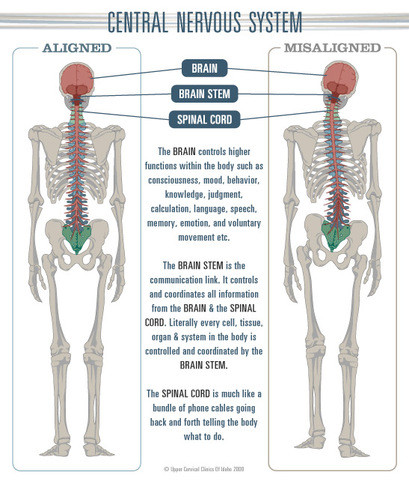
Upper cervical care focuses on the first two bones in the neck, but we evaluate the spine as a whole. When the neck is misaligned, it can affect posture and nerve communication through the rest of the spine — which is why two patients with the same symptom can need very different care.
Rather than treating a symptom in isolation, we look for the underlying misalignment and correct it gently, with no twisting or cracking. Care is planned around the whole spine, not a single joint.

Next Step
Not sure where to start?
If you are unsure whether chiropractic care is appropriate for your condition, call the office and we will talk it through with you — or refer you somewhere better suited to your needs.
Free consultations are available for new patients, and appointments are scheduled so we can give your case the time it deserves.
Not sure whether chiropractic care is right for your condition?
Call our Duncan office and we will talk it through with you. Free consultations are available for new patients.
Wellness Chiropractic Health Center
Office Hours
Mon – Wed 8:00am – 12:00pm & 2:00pm – 6:00pm
Thursday 8:00am – 12:00pm & 3:00pm – 7:00pm
Fri – Sun Closed
Thursday 8:00am – 12:00pm & 3:00pm – 7:00pm
Fri – Sun Closed
© 2026 Wellness Chiropractic Health Center. All rights reserved.Good Faith Estimate available upon request — No Surprises Act.Privacy Policy